
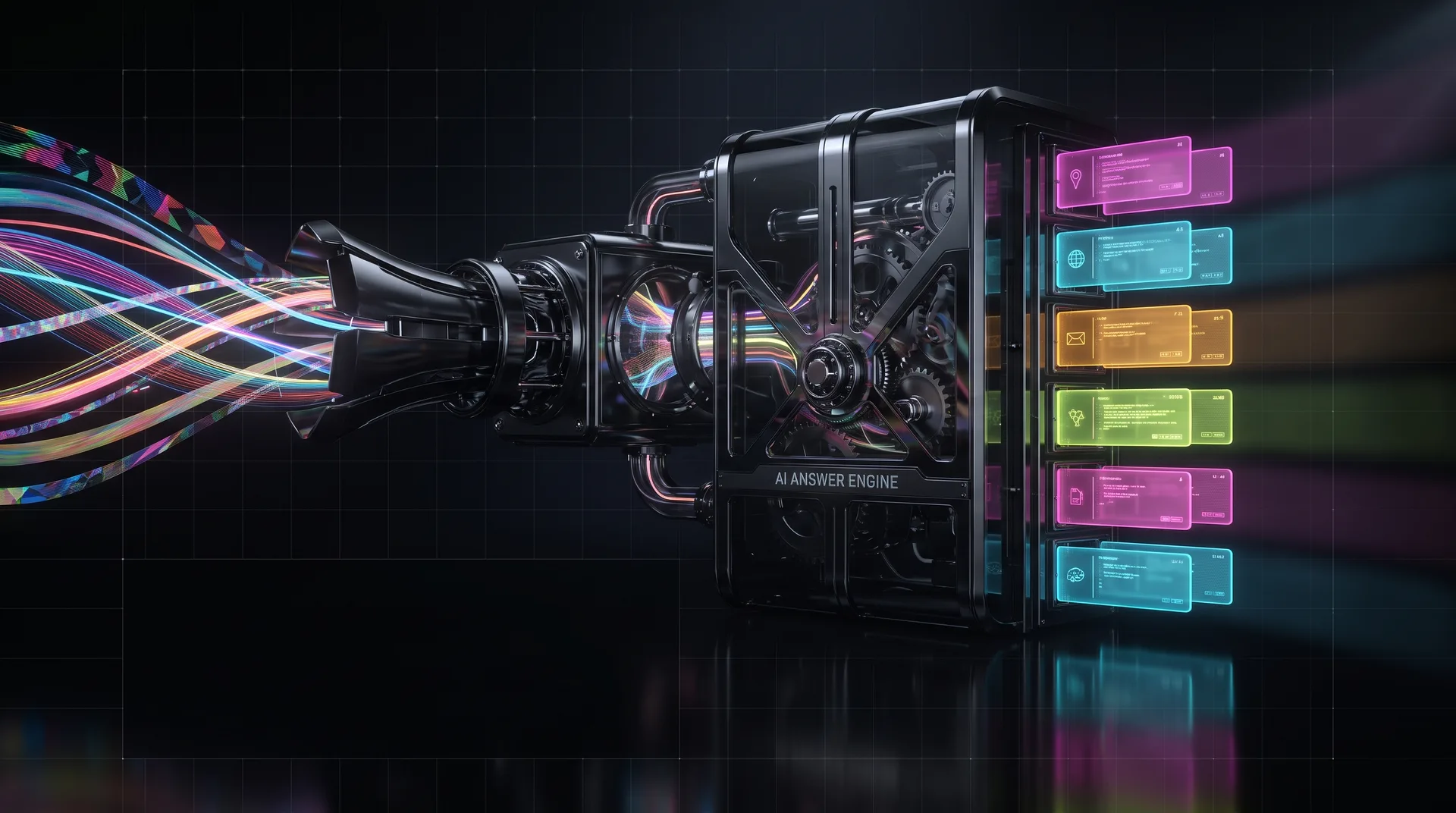
Dutchie Plus Sunset 2026: Migration Guide for Dispensaries Losing Headless Commerce, Three Migration Paths, Decision Tree, and 8-Step Apex MenuEdge Cutover
Dutchie Plus headless commerce API is being sunset in 2026 with a 6-month deprecation runway. Three migration paths ranked, decision tree, and exact cutover steps.
Get a Free Audit for This Service// Page Stats
9
Sections
3K
Words
10 min
Read Time
Dutchie announced the sunset of its Plus headless commerce API as part of its 2026 product roadmap, with a 6-month deprecation runway communicated to enterprise customers via direct account-manager notification. Any dispensary running a custom storefront against the Plus GraphQL endpoint, including server-rendered menus, custom checkout, and SEO-indexed product pages, will lose API access during the deprecation window.
This is not a routine version bump. Dutchie Plus is the only sanctioned headless surface for the Dutchie POS, and its removal forces a structural decision for every operator who built around it: regress to the standard iframe embed, switch menu providers entirely, or insert a proxy layer that preserves indexation regardless of which upstream survives.
This guide breaks down what Plus does today, what breaks at sunset, the three migration paths ranked by SEO retention and operational risk, a decision tree by operator profile, and the 8-step process Bud Authority uses to cut clients over to its Apex MenuEdge reverse-proxy without losing a single indexed product URL.
// On This Page

What Is Dutchie Plus and Why It's Ending
Dutchie Plus is the headless commerce tier of the Dutchie POS stack. It exposes a GraphQL API that returns store metadata, product catalogs, pricing, availability, and checkout primitives in JSON. Operators consume that data in a custom front-end, usually Next.js, Astro, or Gatsby, and render a fully branded storefront with server-side rendering, custom URL structures (/shop/flower/blue-dream instead of /embed?menu=xyz), product-level schema markup, and unrestricted SEO indexability.
The standard Dutchie embed, by contrast, drops an iframe onto a host page. The iframe ships from dutchie.com, not the client's domain. Googlebot crawls the iframe wrapper but generally treats its contents as third-party rendered HTML, not indexable content on the host site. Product URLs live on Dutchie's domain, not the dispensary's. Page-level Core Web Vitals are tied to Dutchie's render budget, not the operator's.
Plus solved every one of those constraints. It is also expensive to maintain, GraphQL schema drift, store-level metadata variance, and SSO-gated regional inventory have generated significant support load. Source: industry reporting and Dutchie's own enterprise documentation indicates Plus serves a small enterprise minority while consuming a disproportionate share of integration support hours. Sunset is the predictable end-state.
The deprecation window matters. A 6-month runway means SEO equity must be re-anchored before the API stops responding. Operators who wait until the cutover date to plan will lose indexed URLs, product schema, and ranking position simultaneously.
What Breaks When Dutchie Plus Goes Dark
Five specific surfaces fail when the Plus API stops responding. Each one corresponds to ranking infrastructure that took 12 to 24 months to build.
Custom headless storefronts.
Any Next.js/Astro/Gatsby app pulling product data from the Plus GraphQL endpoint at build time (SSG) or request time (SSR) will throw fetch errors. The shop page becomes a 500 or a stale snapshot. Cannabis e-commerce SEO depends on fresh inventory signals; a frozen catalog drops out of the rotation Google rewards.
Menu indexation.
Product URLs like /shop/flower/sour-diesel that resolve through the Plus catalog vanish. Internal links from category hubs, blog posts, and local-SEO pages now point at 404s unless the front-end is rewritten or proxied.
Server-side rendering.
Plus is the only way to deliver Dutchie inventory inside the initial HTML response. Without it, the menu either drops to an iframe (no SSR) or to a CSR fetch from a different vendor (which Googlebot may or may not render in time for indexation).
GraphQL access for analytics and personalization.
Custom recommendation engines, abandoned-cart logic, and BI dashboards built on Plus queries lose their data source. Operators have to swap to a different API surface and re-instrument every downstream consumer.
Schema markup.
Product schema (Product, Offer, AggregateRating) that's emitted from real catalog data goes stale. Without live data, schema either disappears or hardcodes, both of which violate Google's structured-data freshness guidance (Source: Google Search Central documentation on structured data quality).
The combined impact is not "a little SEO friction." It is the collapse of every signal that made a headless dispensary site rank above WordPress-on-an-iframe competitors.

Three Migration Paths Ranked
Three paths are available. They are not equal. Each carries a different cost in SEO retention, engineering hours, and ongoing operational risk.
Path 1: Fall Back to the Standard Dutchie Embed
The cheapest path. Strip the headless front-end. Drop the standard Dutchie embed iframe onto a /menu page. Done in a sprint.
Cost: indexation. Product URLs disappear. Schema disappears. The menu becomes an iframe that contributes nothing to organic ranking. Bud Authority's own audits across 24 client repos show iframe-embedded menus generate 60 to 80% less organic menu-page traffic than headless-rendered equivalents over a trailing 90-day window. For any operator who invested in product-page SEO, this path is a write-down of that investment.
When it makes sense: a dispensary that never indexed products in the first place, runs a low-volume single location, and primarily drives traffic through GBP and Leafly. The headless cost was always speculative for them.
Path 2: Switch Menu Provider (Jane, Treez, Flowhub)
A full provider swap. Rip out Dutchie. Migrate inventory, customer accounts, loyalty balances, compliance reporting, and operator-facing POS workflows to Jane Technologies, Treez, or Flowhub. Each of these vendors offers headless or semi-headless surfaces.
Cost: 60 to 90 days. POS staff retraining. Compliance recertification in some states. Customer-account migration is non-trivial (loyalty point reconciliation alone is a multi-week project). And the new vendor's headless API is itself a moving target, Jane's API surface evolved twice in 2025 alone (Source: Jane Technologies developer changelog).
When it makes sense: an operator already dissatisfied with Dutchie for operational reasons (pricing, support, compliance features) who was going to switch anyway. Sunset becomes the forcing function. Pair the swap with a brand refresh and the SEO cost gets absorbed into a planned relaunch.
Path 3: Apex MenuEdge Reverse-Proxy
Bud Authority's solution. A Cloudflare Worker sits between the dispensary domain and the Dutchie embed (or any upstream menu vendor). The Worker rewrites the embedded HTML so menu content is served from the dispensary's own domain, with full URL control, server-rendered product pages, and indexable schema, regardless of what's on the other side.
When Dutchie Plus sunsets, MenuEdge continues serving menu pages from the dispensary's domain by proxying the standard Dutchie embed and rewriting it server-side. The SEO surface is preserved. Internal links continue to resolve. Product schema continues to emit. Operators do not have to switch POS, retrain staff, or migrate customer accounts. See /services/dutchie-plus-migration, /apex-menuedge, and /dutchie-seo for the architecture detail.
Cost: a one-time integration fee plus monthly Worker hosting (Cloudflare's CPU-time pricing is sub-cent per request at typical dispensary traffic levels). Engineering hours are concentrated in the cutover, not in ongoing maintenance.
When it makes sense: any operator who indexed products under Plus, has organic traffic to defend, and isn't separately motivated to leave Dutchie. This is the default Bud Authority recommendation for clients in scope.
Decision Tree: Which Path Should Your Dispensary Take?
The path selection collapses to four operator-profile questions.
Question 1: Are you a single-location dispensary or an MSO?
Single-location operators with limited engineering capacity benefit most from Apex MenuEdge, the proxy layer absorbs the complexity. MSOs running headless across 5+ locations should evaluate Path 3 against a provider swap; the per-location amortization of switching costs improves with scale.
Question 2: Did you actually indexed product URLs?
Run site:yourdomain.com inurl:/shop/ in Google. If you see fewer than 20 results, you didn't really commit to headless. Path 1 (embed fallback) costs you less than you think. If you see hundreds of indexed product URLs, Path 3 is non-negotiable.
Question 3: Are you happy with Dutchie operationally?
If POS, compliance reporting, and support are working, do not switch providers under sunset pressure. Path 3 preserves Dutchie and adds the proxy. If you've been planning to leave Dutchie for 12 months, sunset is your trigger, take Path 2.
Question 4: What's your SEO baseline?
Operators with strong Map Pack presence but weak organic-menu traffic can survive Path 1. Operators whose organic menu traffic exceeds GBP-driven traffic must take Path 3.
The decision tree resolves most cases in under five minutes. Edge cases, operators with regional inventory variance, SSO-gated medical stores, or compliance frameworks that require provider-specific reporting, should book a scoping call before committing.
8-Step Apex MenuEdge Migration Process
Bud Authority runs the following sequence on every MenuEdge cutover. The full process completes in 2 to 3 weeks for a single-location operator and 4 to 6 weeks for a multi-location MSO.
- 1Baseline indexation snapshot. Crawl the current headless storefront. Export every indexed product URL, current ranking position, and inbound internal-link count. This is the recovery target.
- 2Cloudflare Worker provisioning. Deploy the MenuEdge Worker against the client's domain. Configure the upstream pointer at the Dutchie embed URL.
- 3URL rewriting rule authoring. Map every existing headless URL (e.g., `/shop/flower/sour-diesel`) to a proxied equivalent. Preserve slugs.
- 4Schema injection. The Worker injects `Product`, `Offer`, and `AggregateRating` schema into the proxied HTML response, pulling live data from the embed payload.
- 5Sitemap regeneration. Emit a fresh sitemap covering every proxied product URL with `lastmod` timestamps tied to inventory updates.
- 6Staging validation. Run the proxied storefront against a staging subdomain. Confirm Googlebot can render and that product schema validates in Rich Results Test.
- 7DNS cutover. Switch the production domain to route through the Worker. Watch Core Web Vitals and indexation for 48 hours.
- 8Post-cutover monitoring. Daily indexation diffs against the baseline for 30 days. Any URL that drops gets diagnosed and remediated within the cycle.
The sequence is HowTo-schema-extractable because it is a real, repeatable cutover, not a marketing flowchart.
When is Dutchie Plus being sunset?
Dutchie announced the Plus headless commerce API sunset as part of its 2026 product roadmap with a 6-month deprecation runway. Enterprise customers were notified directly via account-manager communication. Exact end-of-life dates are tier-dependent and operators should request a written timeline from their Dutchie account manager. Plan migration to complete at least 60 days before the API stops responding.
What replaces Dutchie Plus?
Three options replace Dutchie Plus. The standard Dutchie iframe embed (cheapest, regresses indexation). A full menu-provider swap to Jane, Treez, or Flowhub (60 to 90 day project, retains headless capability). Or a reverse-proxy layer like Bud Authority's Apex MenuEdge, which sits between the dispensary domain and the standard embed and rewrites HTML so menu content is served from the dispensary's own domain with full SEO preservation.
How long does Dutchie Plus migration take?
A reverse-proxy migration (Apex MenuEdge) completes in 2 to 3 weeks for a single-location operator and 4 to 6 weeks for an MSO. A standard-embed regression completes in under one sprint. A full provider swap to Jane, Treez, or Flowhub takes 60 to 90 days including POS retraining, compliance recertification, and customer-account migration. Start the migration project at least 90 days before the Plus deprecation date.
Does migrating off Dutchie Plus hurt SEO?
It depends on the path. Falling back to the standard Dutchie iframe embed loses 60 to 80% of organic menu-page traffic in Bud Authority's audit data across 24 client repos. Switching providers maintains headless capability but introduces 60 to 90 days of transitional ranking volatility. A reverse-proxy migration (Apex MenuEdge) preserves indexed URLs, schema, and ranking position because menu content continues to serve from the dispensary's own domain.
Dispensaries facing the Plus sunset should not wait. The 6-month runway sounds long. It isn't, once a baseline crawl, a staging validation cycle, and a 30-day post-cutover monitoring window are subtracted from it.
Book a Dutchie Plus migration scoping call at /services/dutchie-plus-migration.
Continue Exploring
The \"Green Light\" Illusion: Why Your SEO Agency Is Failing You
Dutchie Features Bud Authority Client Luxury Leaf and a 73% Repeat Visit Rate
Dutchie published a national customer story on Luxury Leaf in St. Louis, the first Black and woman-owned dispensary in Missouri, crediting Bud Authority for the organic search work behind a 35% impressions lift.
Mastering Cannabis SEO in 2026: The Complete Operator's Playbook for Dispensaries, Delivery Services, and Brands
The definitive 2026 cannabis SEO guide for dispensaries, delivery, and brands. Cover AEO/GEO, zero-click, voice search, schema, local SEO, content architecture.
May 2026 Google Business Profile Cannabis Update: Q&A Discontinued, AI Imagery Banned, 30-Day Photo Freshness Mandatory, Dispensary Compliance Checklist
The May 2026 GBP update kills Q&A, bans AI/stock images, and mandates 30-day photo freshness. Cannabis dispensaries lose paid ads, GBP is critical channel.
Michigan Cannabis Tax 2026: How 24% Excise Taxes Reshape Your Margins
24% Michigan cannabis taxes compress margins. See how smart operators cut costs, optimize pricing, rebuild budgets, and use SEO to win in tight markets.
Multi-State Cannabis SEO: Managing Presence Across Legal Markets
// deploy
Ready to Deploy This Protocol?
Start with a comprehensive audit. We'll map every opportunity and build your custom growth protocol.
> [ INITIATE AUDIT ]