


Maryland · Market Intelligence
Maryland cannabis SEO

Maryland · Market overview
The Maryland market, in brief
The figures we can source for Maryland, the search surfaces we optimize, and the places this page covers.
- 2.5
- seconds
- 200
- milliseconds or less
- 24
- months
Source: web.dev
Source: web.dev
Source: cannabis.maryland.gov
Search surfaces
- 01Organic search
- 02AI answers (AEO)
- 03Generative engines (GEO)
- 04Google local pack
- 05Schema graph
- 06Voice assistants
Where Maryland shoppers find a dispensary

Maryland
Where Are Maryland's Highest-Value Dispensary Markets?

Maryland
How Does the Baltimore-D.C. Corridor Shape Content Strategy?
Content strategy for Maryland dispensaries must addre...
Baltimore-area consumers search with city and neighborhood specificity. D.C.-adjacent consumers search with cross-border intent. Secondary market consumers search with broader geographic terms. A single content calendar must serve all three.
Baltimore content should reference specific landmarks...
Mention the Inner Harbor, Patterson Park, Hampden's 36th Street, the National Aquarium, and Johns Hopkins Hospital. Reference the Light Rail and MARC Train stations that bring commuters from the suburbs. This local specificity signals to Google that the content comes from a genuine Baltimore business, not a generic template.
D.C.-suburb content should address the Maryland-D.C.
Educational content serves all markets.

Google Business Profile optimization is a high-impact activity for Maryland dispensaries.

Maryland
How Should Maryland Dispensaries Prepare for AI Search Growth?


Maryland
What Results Can Maryland Dispensaries Expect from Professional SEO?

Maryland
What Maryland cannabis marketing actually consists of
Maryland
How Did Maryland's Adult-Use Market Change the Competitive Picture?

Maryland
What Technical SEO Advantages Win in Maryland's Market?
2.5
seconds
Source: web.dev
200
milliseconds or less
Source: web.dev

Maryland market intelligence
The full Maryland cannabis search picture
A field read of the Maryland cannabis search surface, section by section.
Where Are Maryland's Highest-Value Dispensary Markets?
Baltimore City and Baltimore County form the state's largest cannabis market, and many dispensaries compete for the same attention. The Inner Harbor, Fells Point, Federal Hill, and Canton neighborhoods generate dense foot traffic and high search volume. Dundalk, Towson, and Catonsville extend the competitive zone into the suburbs. Ranking in Baltimore requires neighborhood-level content, aggressive Google Business Profile optimization, and technical site speed that outperforms the WordPress-heavy competition.
Montgomery County and Prince George's County, the Maryland suburbs directly bordering Washington, D.C., represent the state's second major market, served by many dispensaries. The key differentiator here is cross-border search intent. Consumers in Bethesda, Silver Spring, College Park, and Hyattsville frequently search terms like "dispensary near DC," "cannabis Silver Spring," and "Maryland dispensary from Washington." These searches blend Maryland and D.C. geographic intent, creating keyword opportunities that dispensaries targeting only Maryland terms miss entirely.
BudAuthority builds D.C.-adjacent content strategies that capture this overlap. We create location pages addressing searches from both Maryland residents and D.C. commuters. We optimize Google Business Profile categories and attributes to appear in local results for queries originating across the D.C. border. This cross-jurisdictional approach consistently outperforms single-state strategies for Montgomery and Prince George's County dispensaries.
Frederick, Hagerstown, and the I-70 corridor in western Maryland offer lower competition with solid demand. Frederick County supports a growing number of dispensaries, and search competition may not yet have reached the intensity seen in Baltimore or the D.C. suburbs. The Eastern Shore, including Salisbury and Ocean City, mirrors this pattern with seasonal tourist traffic adding summer search volume for coastal dispensaries.
How Does the Baltimore-D.C. Corridor Shape Content Strategy?
Content strategy for Maryland dispensaries must address three distinct audience segments. Baltimore-area consumers search with city and neighborhood specificity. D.C.-adjacent consumers search with cross-border intent. Secondary market consumers search with broader geographic terms. A single content calendar must serve all three.
Baltimore content should reference specific landmarks and neighborhoods. Mention the Inner Harbor, Patterson Park, Hampden's 36th Street, the National Aquarium, and Johns Hopkins Hospital. Reference the Light Rail and MARC Train stations that bring commuters from the suburbs. This local specificity signals to Google that the content comes from a genuine Baltimore business, not a generic template.
D.C.-suburb content should address the Maryland-D.C. regulatory differences. Maryland allows adult-use purchases for anyone 21+ with valid ID. D.C. operates under Initiative 71, which legalized possession and gifting but not commercial sales. This distinction drives Maryland-bound search traffic from D.C. residents. Pages comparing Maryland and D.C. cannabis laws, explaining how to purchase legally in Maryland from D.C., and listing dispensaries accessible by Metro stations on the Red, Green, and Orange lines capture high-intent cross-border queries.
Educational content serves all markets. Strain guides, terpene profiles, edible dosing explainers, and regulatory FAQ pages generate consistent search traffic. BudAuthority structures this content for answer engine optimization, with each H2 phrased as a natural question and each opening paragraph delivering a direct 40-60 word answer for AI extraction.
What Local SEO Tactics Drive Results for Maryland Dispensaries?
Google Business Profile optimization is a high-impact activity for Maryland dispensaries. In the Baltimore metro and D.C. suburbs, local pack results capture a large share of clicks for "dispensary near me" and "[city] cannabis" queries. A complete GBP with accurate hours, full product attributes, weekly posts, a healthy volume of reviews, and owner-responded Q&A entries outperforms incomplete profiles regardless of website quality.
BudAuthority's local SEO management for Maryland clients includes category optimization (primary: Cannabis Store, secondary categories aligned with services), attribute management for accessibility, payment methods, and product types, photo uploads showing the actual storefront and interior, and review generation campaigns that build velocity without violating Google's policies.
Citation consistency across directories matters in Maryland because the state spans multiple metro area definitions. A Baltimore dispensary might appear in Yelp, Weedmaps, Leafly, Apple Maps, and many local directories. If the name, address, and phone number differ across even two of those listings, Google's local algorithm can lose confidence in the business data. BudAuthority audits and corrects citation accuracy across all major platforms.
Local link building in Maryland draws from the Baltimore Sun, Baltimore Business Journal, Maryland Daily Record, local chambers of commerce in Baltimore, Frederick, Annapolis, and the D.C. suburbs, healthcare directories, and cannabis industry associations. We identify quality link opportunities per client and pursue them through editorial outreach and business relationship development.
How Should Maryland Dispensaries Prepare for AI Search Growth?
AI-powered search tools are rewriting how consumers find cannabis information. Google's AI Overviews pull content from dispensary websites to answer questions directly in search results. ChatGPT with browsing and Perplexity cite specific pages when users ask about Maryland cannabis laws, dispensary recommendations, and product information.
Dispensaries that structure content for AI extraction win citations. That means entity-first sentences at the top of each page. It means visible FAQ sections rendered in HTML, not hidden behind JavaScript toggles or accordion components. It means allowing AI crawlers full access through robots.txt directives that welcome GPTBot, CCBot, and PerplexityBot.
BudAuthority implements max-snippet:-1 in both robots meta tags and X-Robots-Tag headers, giving AI tools permission to extract full-length answers. We structure content with QAPage and HowTo schema so machines can parse question-answer relationships without rendering the full page. Maryland dispensaries that adopt these practices now will dominate AI search results as these platforms grow their market share through 2026 and beyond.
What Results Can Maryland Dispensaries Expect from Professional SEO?
Ranking movement timelines vary with competition, starting point, and site health. Secondary markets like Frederick, Hagerstown, and Salisbury tend to move faster than Baltimore and the D.C. suburbs, but no timeline is guaranteed.
BudAuthority measures Maryland campaign performance through organic traffic growth, GBP impressions and actions, keyword position tracking across target terms, and conversion events tied to menu views, direction requests, and phone calls. We report monthly with full data transparency. No vanity metrics. No obscured numbers.
Maryland's cannabis market will continue growing as new licenses issue and consumer adoption deepens. Dispensaries that build organic search authority now will hold those positions as competition intensifies. The alternative, waiting until every competitor has invested in SEO, means paying significantly more to achieve the same results.
---
---
What Maryland cannabis marketing actually consists of
Maryland cannabis marketing is mostly organic, and not by preference. Google prohibits ads for substances that induce highs, and Meta prohibits ads that promote or offer the sale of THC products. That removes paid search and paid social from the plan and leaves search visibility, the Google Business Profile and owned channels doing the acquisition work.
Maryland enforces the remainder with money. Advertising may not target anyone under 21 or use imagery attractive to minors, and the Maryland Cannabis Administration sets penalties of $1,000 for a first violation rising to $50,000 for repeat violations inside 24 months (COMAR 14.17.14.06.pdf)). Compliance review belongs in the marketing workflow, not after it.
How Did Maryland's Adult-Use Market Change the Competitive Picture?
Maryland's transition from medical-only to dual-use reshaped every dispensary's customer base. Medical patients had already established purchasing patterns and dispensary loyalties. Adult-use legalization brought an entirely new audience into the market: consumers who had never held a medical card, had no dispensary preference, and started their buying journey with a Google search.
The Maryland Cannabis Administration issues retail licenses through a process that includes social equity provisions prioritizing applicants from communities disproportionately affected by cannabis prohibition. License categories cover standard dispensaries, micro-licenses for smaller operators, and on-site consumption lounges. Each license type creates distinct SEO needs. Standard dispensaries compete for broad terms. Micro-dispensaries need neighborhood-level positioning. Consumption lounges target experience-based queries entirely different from product-purchase searches.
Maryland imposes state taxes on adult-use sales, and medical purchases are treated differently. Check the Maryland Comptroller and the Maryland Cannabis Administration for current rates before publishing any tax figure. Tax differences between states are a topic dispensaries can build comparison content around, once the figures are sourced.
What Technical SEO Advantages Win in Maryland's Market?
Maryland dispensaries running on WordPress with Elementor, Divi, or WPBakery page builders can face a structural speed problem, because these platforms ship heavy render-blocking JavaScript that slows Largest Contentful Paint on mobile. A dispensary on a static-first architecture using React SSG serves pre-built HTML from edge CDN locations, which supports fast server response and a strong LCP. In competitive Baltimore and D.C.-suburb markets, that speed difference can help for contested keywords.
Core Web Vitals scores function as a tiebreaker in dense markets. When several dispensaries target "best dispensary Baltimore" and all have decent content and backlinks, the site with the best LCP, INP, and CLS scores can earn the ranking edge. BudAuthority builds every Maryland client site to Google's "good" thresholds in Core Web Vitals: LCP within 2.5 seconds, INP of 200 milliseconds or less, and CLS of 0.1 or less. We keep client-side JavaScript lean on first load.
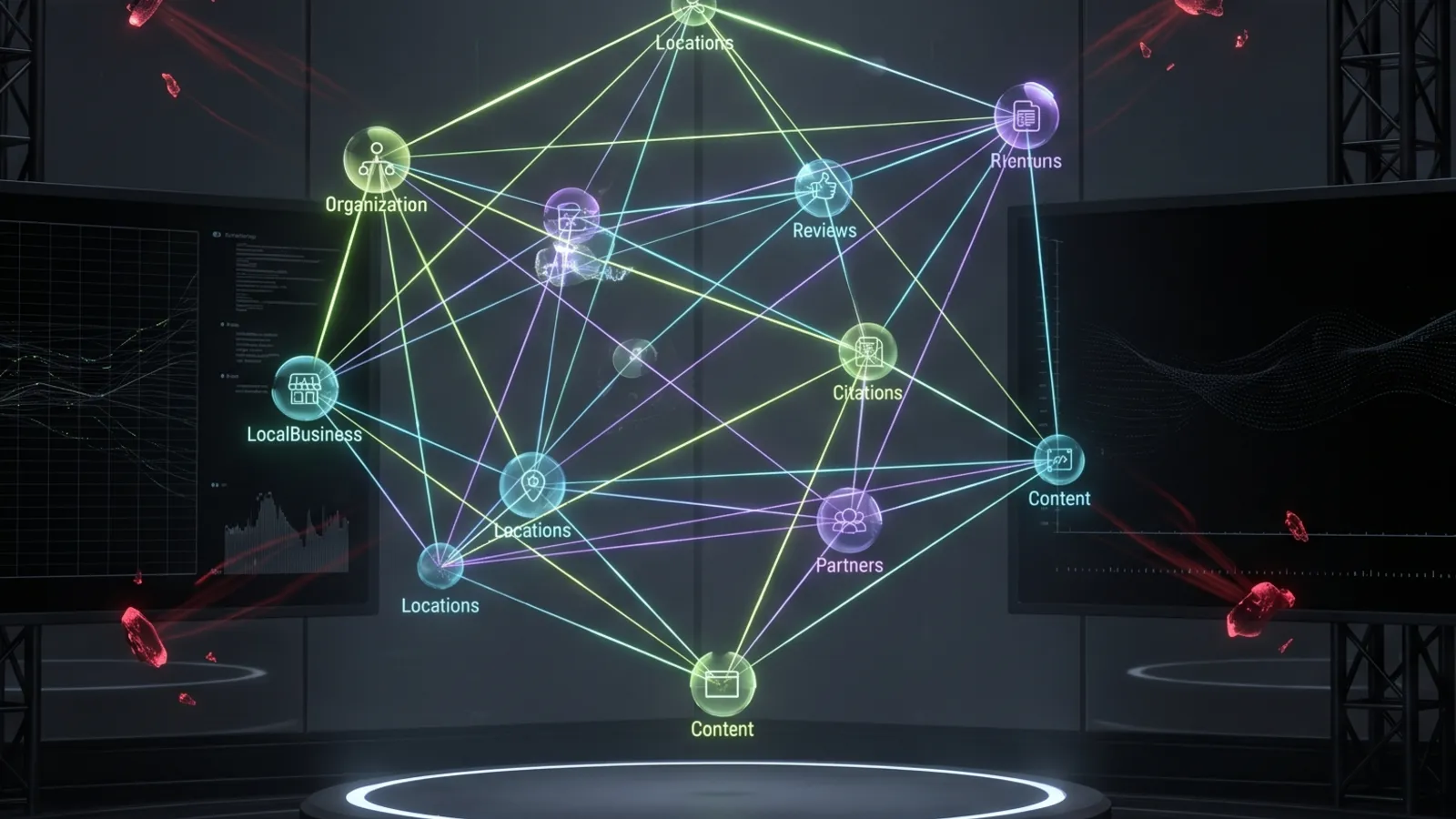
Schema markup establishes the machine-readable signals that power both traditional rankings and AI search citations. Maryland dispensary sites need Organization and LocalBusiness JSON-LD (using the CannabisDispensary type) on the homepage, BreadcrumbList on every page, FAQPage on informational content, Product schema on menu pages, and WebSite schema with SearchAction for sitelinks. BudAuthority also implements SpeakableSpecification on key pages, enabling voice assistants and AI tools to extract answers directly.
Next step