

Hawaii · Market Intelligence
Hawaii cannabis SEO

Hawaii
How Do Neighbor Island Markets Differ from Oahu?

Hawaii
Why Does Island Geography Reshape Every Aspect of Cannabis SEO?

Hawaii
What Does Oahu's Competitive Landscape Look Like for Cannabis Search?


Hawaii
Why Do Hawaii Medical Dispensaries and Smoke Shops Need SEO and AI Optimization?

Hawaii
How Does Hawaii's Medical-Only Framework Change Patient Search Behavior?

Patients and prospective patients increasingly ask AI assistants about Hawaii cannabis access.

Hawaii
Common questions
1 answered
- 01What Tourism Dynamics Influence Hawaii Cannabis Search?
- Waikiki alone sees millions of tourists annually. Every visitor represents a potential cannabis search, and many of them search specifically about Hawaii's cannabis laws before or during their trip. "Can I buy weed in Hawaii," "is marijuana legal in Honolulu," and "medical cannabis for tourists Hawaii" are consistent high-volume queries. Hawaii's medical-only framework means most tourists cannot legally purchase cannabis. But the search demand exists regardless, and dispensaries that rank for these queries capture awareness, build brand visibility, and can educate visitors about the medical pathway for those who qualify. Some visitors with qualifying conditions from their home states explore whether Hawaii's program offers reciprocity or temporary patient access.

Hawaii
What Technical Standards Should Hawaii Cannabis Websites Meet?
Hawaii's geographic isolation introduces a connectivi...
BudAuthority's static site generation architecture ad...
Schema implementation for Hawaii medical dispensaries...
Hawaii
What Cultivation Realities Affect Hawaii Cannabis SEO Content?

Hawaii is a medical market, so the marketing question is narrower than it is on the mainland: the audience is certified...

Hawaii market intelligence
The full Hawaii cannabis search picture
A field read of the Hawaii cannabis search surface, section by section.
How Do Neighbor Island Markets Differ from Oahu?
Hawaii Island (Big Island) operates as two distinct micro-markets. Kona, on the western leeward coast, serves tourists visiting Kailua-Kona, Captain Cook, and the Kohala Coast resorts. Dispensary density is low on both sides of the island, meaning first-page rankings are achievable quickly for retailers who invest in optimization.
Maui draws millions of visitors annually to Lahaina, Haleakala National Park, and the Road to Hana. Tourist-adjacent cannabis searches generate demand that Maui dispensaries can capture through content targeting "medical cannabis Maui," "dispensary near Lahaina," and "329 card visitor process."
Kauai and Molokai have minimal dispensary presence. Focused investment in these Neighbor Island markets can build dominant positions that larger markets rarely allow.
Why Does Island Geography Reshape Every Aspect of Cannabis SEO?
Hawaii is not one market. It is five separate markets separated by water. A dispensary in Kailua-Kona on the Big Island cannot serve a patient in Lahaina on Maui. A Honolulu retailer has no relevance to someone searching from Lihue on Kauai. Google understands island boundaries. AI search engines understand island boundaries. Any SEO strategy that treats Hawaii as a single market wastes resources and confuses search engines.
Waikiki, Kailua, Kapolei, Pearl City, and Kaneohe each represent distinct communities with their own search patterns. Hawaii Island (Big Island) divides between Kona on the leeward coast and Hilo on the windward side, two towns separated by Mauna Kea and Mauna Loa with entirely different demographics. Maui's retail concentrates in Kahului and Kihei. Kauai operates with minimal dispensary presence.
BudAuthority builds island-specific and town-specific content architectures for Hawaii clients. Each island gets its own content cluster. Each town within an island gets targeted landing pages. Google Business Profiles reflect island-level service areas accurately. This precision prevents the diluted geographic signals that confuse search algorithms and waste crawl budget.
What Does Oahu's Competitive Landscape Look Like for Cannabis Search?
Oahu is where the majority of Hawaii's cannabis competition plays out.
Most Oahu dispensaries operate basic websites. Technical SEO sophistication is low compared to mainland markets. Structured data implementation is rare. Google Business Profiles are frequently incomplete, with missing hours, absent product categories, and few reviews. This underdeveloped landscape creates significant opportunity for any dispensary willing to invest in professional optimization.
BudAuthority's local SEO approach for Oahu clients targets neighborhood-level searches, medical pathway keywords, and tourist-adjacent terms to maximize total search capture across the island.
Why Do Hawaii Medical Dispensaries and Smoke Shops Need SEO and AI Optimization?
BudAuthority provides targeted SEO, AEO, and Google Business Profile management that helps Hawaii dispensaries connect with the state's registered 329 medical patient base, driving high-value traffic directly to their island-specific menus. Adult-use legalization bills like SB 3335 have faced legislative hurdles, and the timeline for any change remains uncertain. Medical operators who invest in high-performance web design and topical authority today will lock in their domain authority, securing first-mover advantage for the eventual recreational market.
In addition, Hawaii's tourism corridor and local centers support a highly active market of smoke shops and hemp retailers. Operating outside the medical registry, these shops cater to tourists and residents seeking premium glassware, accessories, and compliant hemp-derived CBD. For these businesses, ranking for terms like "smoke shop Honolulu" or "CBD store Maui" is critical to capturing local foot traffic. BudAuthority builds keyword dominance for Hawaii smoke shops through localized local SEO and AEO, outranking national directories and positioning them to capture immediate consumer search intent across the islands.
---
---
How Does Hawaii's Medical-Only Framework Change Patient Search Behavior?
Hawaii has not legalized recreational cannabis. Every legal cannabis transaction requires a physician recommendation and state patient registration through the Hawaii Department of Health's 329 program. This medical-only framework fundamentally shapes how potential customers search for cannabis.
Mainland recreational markets see high volumes of casual searches: "dispensary near me," "best weed deals," "cannabis delivery tonight." Hawaii's search landscape skews toward medical pathway queries: "how to get a medical cannabis card in Hawaii," "329 card Hawaii," "qualifying conditions for medical marijuana Hawaii," and "MMJ doctor Honolulu." Dispensaries that optimize only for recreational-style keywords miss the majority of Hawaii's actual search demand.
Qualifying conditions drive significant long-tail search volume. Chronic pain, PTSD, cancer, glaucoma, Crohn's disease, and epilepsy all appear in Hawaii patient searches. Content addressing each qualifying condition, the physician recommendation process, and the 329 card application timeline captures patients at the top of the funnel, before they have chosen a dispensary. The dispensary that educates the patient earns the patient's first visit.
BudAuthority develops medical pathway content for every Hawaii client. We build condition-specific pages, physician directory resources, and 329 program guides that target the informational searches driving Hawaii's medical cannabis patient pipeline. This content strategy captures demand at the awareness stage and guides patients toward our clients' dispensaries through internal linking and trust-building content.
How Are AI Search Engines Handling Hawaii Cannabis Queries?
Patients and prospective patients increasingly ask AI assistants about Hawaii cannabis access. "Can tourists get medical cannabis in Hawaii?" "How do I get a 329 card?" "What conditions qualify for medical marijuana in Hawaii?" These questions generate AI responses from ChatGPT, Gemini, and Perplexity that pull from websites with structured, authoritative content.
Hawaii's medical-only framework makes accuracy especially important in AI responses. Incorrect information about recreational legality, physician requirements, or qualifying conditions can mislead patients and create legal risk. BudAuthority builds content that AI engines can extract accurately, using answer engine optimization principles: entity-first sentences, concise factual answer paragraphs, and schema markup that structures medical cannabis information for machine readability.
Our robots.txt configurations for Hawaii clients welcome GPTBot, PerplexityBot, and Google-Extended crawlers. We implement SpeakableSpecification on high-value medical information pages, ensuring that AI engines can identify and cite the most authoritative content on our clients' websites. In a medical market where trust and accuracy determine patient choice, AI search visibility reinforces the credibility that drives conversions.
What Tourism Dynamics Influence Hawaii Cannabis Search?
Waikiki alone sees millions of tourists annually. Every visitor represents a potential cannabis search, and many of them search specifically about Hawaii's cannabis laws before or during their trip. "Can I buy weed in Hawaii," "is marijuana legal in Honolulu," and "medical cannabis for tourists Hawaii" are consistent high-volume queries.
Hawaii's medical-only framework means most tourists cannot legally purchase cannabis. But the search demand exists regardless, and dispensaries that rank for these queries capture awareness, build brand visibility, and can educate visitors about the medical pathway for those who qualify. Some visitors with qualifying conditions from their home states explore whether Hawaii's program offers reciprocity or temporary patient access.
BudAuthority builds tourism-aware content for Hawaii clients that addresses visitor questions honestly while directing qualifying patients toward the medical registration pathway. This content targets tourism keywords without making misleading claims about recreational availability, maintaining compliance with Hawaii law while capturing search traffic that most dispensaries ignore entirely.
What Technical Standards Should Hawaii Cannabis Websites Meet?
Hawaii's geographic isolation introduces a connectivity variable that mainland markets do not face. Inter-island internet speeds vary. Mobile connections in rural areas of the Big Island, Maui's upcountry, and Kauai's north shore can be significantly slower than urban Oahu. A website that loads fine in downtown Honolulu may struggle in Captain Cook or Hanalei.
BudAuthority's static site generation architecture addresses this directly. No render-blocking JavaScript. No layout shift. No waiting for a WordPress theme to execute a pile of plugin callbacks before showing the patient a menu.
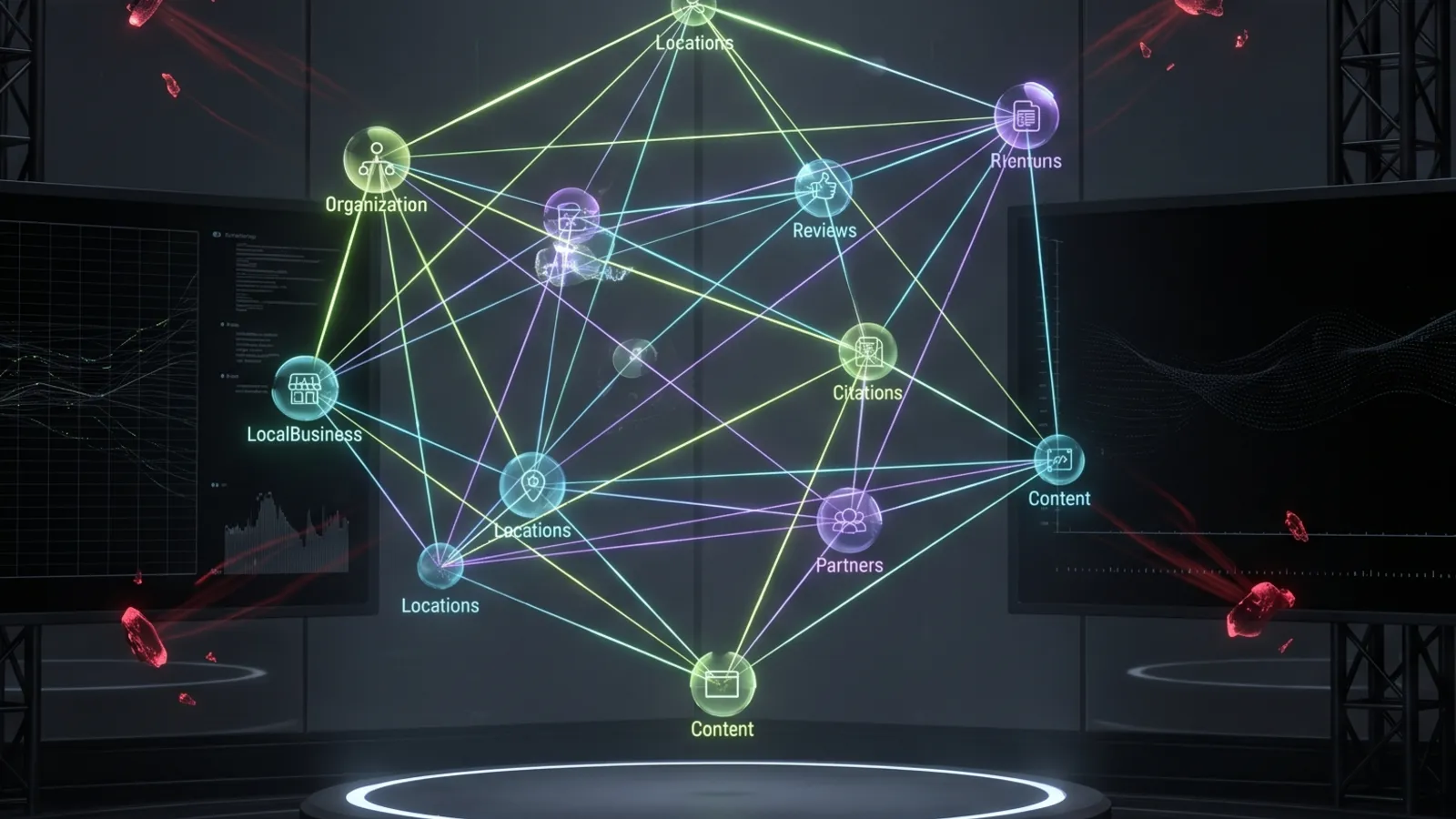
Schema implementation for Hawaii medical dispensaries includes Organization, LocalBusiness with CannabisDispensary type, MedicalBusiness markup reflecting the medical-only framework, BreadcrumbList, and FAQPage structured data. Medical-specific schema signals to Google and AI search engines that the business operates within a healthcare-adjacent context, which can influence how these systems categorize and surface the business in relevant queries.
What Cultivation Realities Affect Hawaii Cannabis SEO Content?
Hawaii mandates that all cannabis sold in the state must be cultivated in the state. No imports from mainland cultivators are permitted. This local cultivation requirement shapes product availability, pricing, and the content angles that resonate with Hawaii patients. Island-grown cannabis carries a quality narrative tied to Hawaii's volcanic soil, tropical climate, and agricultural heritage.
Content emphasizing locally cultivated products, Hawaiian growing conditions, and island-specific strain selections connects with patients who value provenance and quality. Searches like "locally grown cannabis Hawaii," "Hawaiian cannabis strains," and "island-grown dispensary Oahu" represent niche but meaningful keywords that reinforce a dispensary's local authority.
BudAuthority incorporates cultivation-origin content into Hawaii client strategies, building pages that highlight local growing practices, Hawaiian strain profiles, and the quality advantages of island-cultivated cannabis. This content differentiates Hawaii dispensaries from the generic cannabis content that dominates mainland markets and signals genuine local expertise to both search engines and patients.
Hawaii cannabis marketing operates inside a medical-only frame
Hawaii is a medical market, so the marketing question is narrower than it is on the mainland: the audience is certified patients, not the general adult public. The paid channels are closed regardless, since Google prohibits ads for substances that induce highs and Meta prohibits ads that promote or offer the sale of THC products.
Hawaii's dispensary rules also constrain the creative itself. Advertising, signage, menus and waiting room displays may not depict cannabis use, children, celebrities, influencers, cartoons appealing to children, or products resembling commercial food or candy, under the Department of Health rules for medical cannabis dispensaries (HRS 329D-11).
Next step