


Arizona · Market Intelligence
Arizona cannabis SEO

Phoenix is the fifth-largest city in the United States by population.

Arizona
What Technical SEO Gaps Exist Across Arizona Dispensary Websites?
Most Arizona dispensary websites run on WordPress wit...
BudAuthority's static site generation architecture el...
Schema implementation across every page includes Orga...

Arizona
How Does Arizona's Dual Medical-Recreational System Affect SEO Strategy?

Arizona's cannabis search volume follows patterns tied to climate and tourism rather than traditional retail seasonality...

Arizona
How Do AI Search Engines Handle Arizona Cannabis Queries?
Tucson operates as a distinct cannabis market with different competitive dynamics than Phoenix Metro.
Arizona
What Opportunities Exist in Arizona's Secondary Markets?
Cannabis SEO Services - National cannabis SEO expertise
Answer Engine Optimization - AI-powered visibility strategy
Local SEO & GBP Management - Google Business Profile mastery

Arizona
What Makes Scottsdale a Distinct Cannabis Market Within Phoenix Metro?


Arizona market intelligence
The full Arizona cannabis search picture
A field read of the Arizona cannabis search surface, section by section.
How Does Phoenix Metro's Size Shape Cannabis Search Competition?
Phoenix is the fifth-largest city in the United States by population. Scottsdale, Tempe, Mesa, Chandler, and Glendale each host additional clusters of dispensaries competing for overlapping customer bases.
Search intent in Phoenix is hyperlocal. Google's Local Pack in Phoenix rotates results aggressively based on searcher location, making proximity optimization and neighborhood-specific content essential.
BudAuthority builds Phoenix campaigns around zip-code-level targeting. We create content clusters for each neighborhood and suburb, optimize Google Business Profile service areas to reflect actual delivery zones, and implement structured data that signals precise geographic relevance to both Google and AI search engines.
What Technical SEO Gaps Exist Across Arizona Dispensary Websites?
Most Arizona dispensary websites run on WordPress with page builder plugins that generate bloated, slow-loading pages. These sites are functionally invisible to AI search engines that prioritize fast, structured, clean HTML.
BudAuthority's static site generation architecture eliminates these problems. Core Web Vitals pass in Chrome User Experience Report field data, not just lab tests.
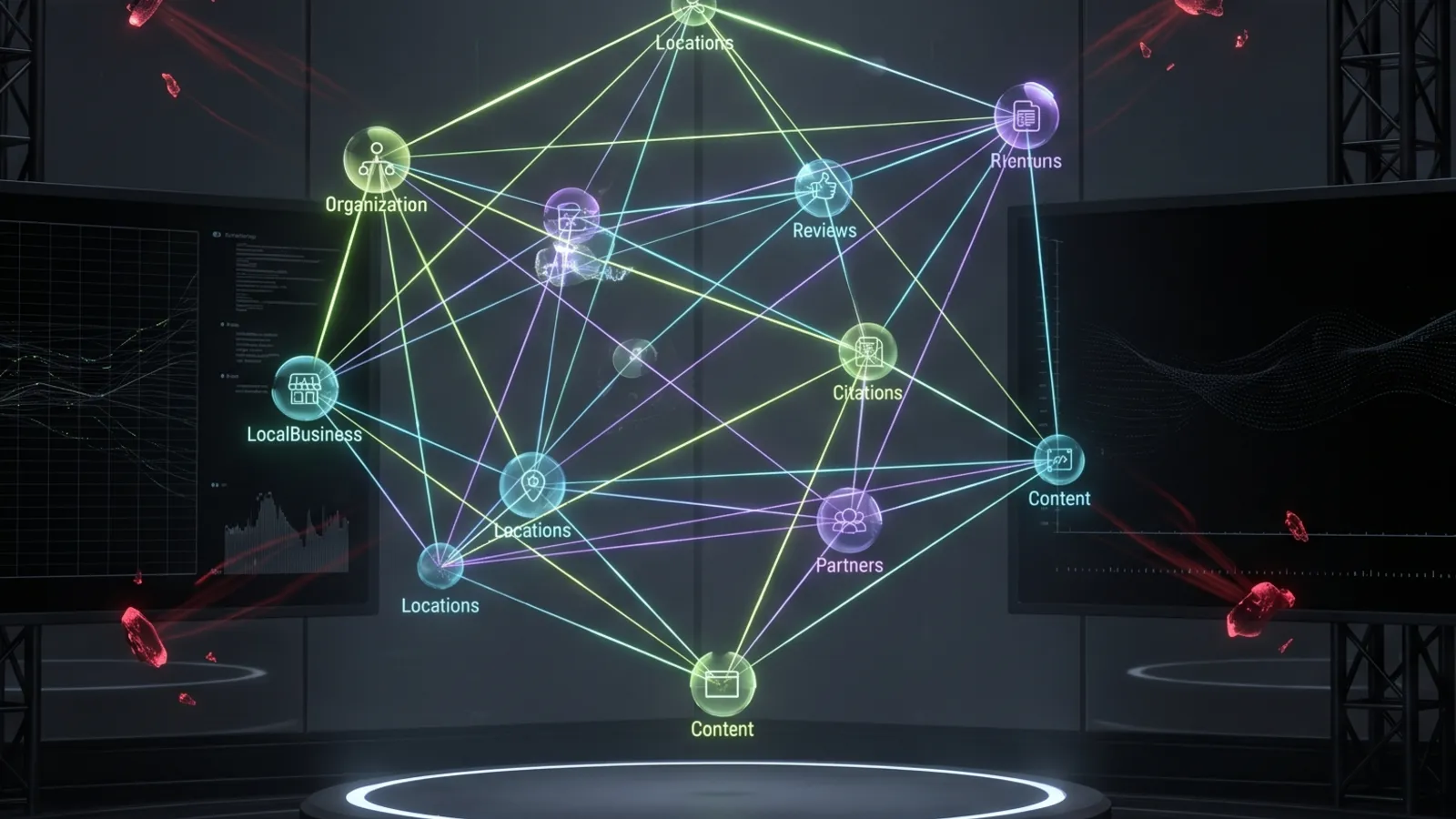
Schema implementation across every page includes Organization, LocalBusiness with CannabisDispensary type, BreadcrumbList, FAQPage, and page-specific structured data. Product pages carry Product markup. Geo pages carry areaServed definitions with GeoCircle boundaries. This technical foundation generates rich results in Per Google Search Console analytics, Google Search and provides AI engines with the structured business data that drives citations and recommendations.
How Does Arizona's Dual Medical-Recreational System Affect SEO Strategy?
Established in 1996, the medical program built an infrastructure of dispensaries, patient registrations, and physician networks that recreational retail later absorbed. Many Arizona dispensaries hold both medical and recreational licenses, serving two distinct customer populations with different search behaviors.
Medical patients search for "medical dispensary near me," "MMJ doctor Phoenix," "Arizona medical cannabis card," and condition-specific terms like "cannabis for chronic pain Arizona." Recreational customers search "dispensary near me," "cannabis delivery Tempe," and product-focused queries. Dispensaries optimizing for only one channel leave significant search volume uncaptured.
Arizona's tax structure reinforces this dual optimization need. Medical patients pay a lower effective tax rate than recreational customers, creating financial incentive to maintain a medical card. Search demand for "how to get a medical card in Arizona" and "Arizona medical cannabis renewal" stays consistently high. BudAuthority builds content strategies that address both customer populations, ensuring dual-license dispensaries capture the full spectrum of cannabis search demand.
What Seasonal Patterns Drive Arizona Cannabis Search Volume?
Arizona's cannabis search volume follows patterns tied to climate and tourism rather than traditional retail seasonality. Cannabis delivery searches spike during summer months as consumers avoid driving in extreme heat. "Cannabis delivery Phoenix," "weed delivery Scottsdale," and "dispensary delivery near me" see measurable volume increases from June through September.
Winter brings Snowbird season. Tens of thousands of seasonal residents from the Midwest and Northeast relocate to Scottsdale, Mesa, Sun City, and other East Valley communities from October through April. These transplants search "dispensary near me" upon arrival and often become regular customers for six months. They search differently than permanent residents, frequently including neighborhood names they have just learned and asking basic regulatory questions about Arizona cannabis laws.
Spring training baseball draws additional tourists to the East Valley each February and March. The Waste Management Phoenix Open, one of the highest-attended golf tournaments in the world, concentrates visitors in Scottsdale each January. Each of these seasonal events generates cannabis search demand that BudAuthority targets through event-specific and seasonal content optimized months in advance.
How Do AI Search Engines Handle Arizona Cannabis Queries?
ChatGPT, Gemini, and Perplexity all generate direct responses to Arizona cannabis questions. Queries like "is recreational weed legal in Arizona," "best dispensary in Tempe," and "Arizona cannabis tax rate" return AI-synthesized answers pulled from websites with strong structured data and entity signals. Arizona dispensaries without answer engine optimization get excluded from these responses entirely.
BudAuthority implements AEO across every Arizona client engagement. We deploy SpeakableSpecification markup on regulatory and FAQ content, QAPage schema for question-and-answer sections, and FAQPage markup rendered as visible text rather than hidden in interactive elements. Our robots.txt configurations welcome GPTBot, PerplexityBot, and Google-Extended crawlers, ensuring our clients' content enters the AI retrieval pipeline.
Arizona's tourism volume amplifies the importance of AI search visibility. Visitors increasingly ask AI assistants for cannabis recommendations while in transit. "Where's the closest dispensary to Sky Harbor?" asked through ChatGPT returns results from websites that have structured their content for machine readability. BudAuthority ensures our Arizona clients are the websites those AI engines cite.
How Should Tucson Dispensaries Approach SEO Differently Than Phoenix?
Tucson operates as a distinct cannabis market with different competitive dynamics than Phoenix Metro. Competition intensity is lower, but so is the margin for error. Tucson's dispensary customer base includes University of Arizona students, Davis-Monthan Air Force Base personnel, retirees, and a strong local community with deep roots.
SEO strategy in Tucson emphasizes community positioning and local authority over the hyperlocal zip-code targeting that Phoenix requires. Tucson dispensaries benefit from content that references local landmarks like Fourth Avenue, the Tucson Mountains, Saguaro National Park, and the San Xavier del Bac Mission. Community-focused content builds trust signals that both Google and AI search engines recognize as genuine local expertise.
Tucson also serves as a gateway for travelers heading to southern Arizona destinations.
What Opportunities Exist in Arizona's Secondary Markets?
Northern Arizona University adds a younger demographic. Dispensaries in Flagstaff that build content around "cannabis near Grand Canyon," "dispensary Flagstaff AZ," and "weed near Sedona" capture tourist traffic that Phoenix dispensaries cannot reach.
Yuma, Lake Havasu City, and Prescott each operate as self-contained markets with minimal SEO competition. These markets will not stay open indefinitely. As more Arizona retailers invest in digital marketing, early movers lock in positions that become increasingly expensive to challenge.
Sierra Vista, Kingman, and Casa Grande round out Arizona's secondary tier. Each community has growing cannabis retail presence and near-zero SEO competition among existing dispensaries. BudAuthority identifies these opportunities through ongoing competitive analysis and helps clients move quickly to claim first-mover positions before the window closes.
---
---
What Makes Scottsdale a Distinct Cannabis Market Within Phoenix Metro?
Scottsdale sits at the premium end of Arizona's cannabis market. Cannabis consumers in Scottsdale search for different products and experiences than shoppers in West Phoenix or South Mountain.
Premium positioning keywords dominate Scottsdale search behavior: "best dispensary Scottsdale," "top shelf cannabis Scottsdale," "live rosin Scottsdale," and "luxury dispensary experience." Dispensaries serving this market need content that matches the consumer expectation of quality, from product descriptions emphasizing craft cultivation and terpene profiles to store imagery that communicates upscale retail environments.
BudAuthority's Scottsdale clients differentiate through content depth and visual presentation. We build product education pages targeting premium search intent, optimize Google Business Profiles with professional photography and detailed product attributes, and implement schema markup that surfaces rich results for product-specific queries. The goal is capturing Scottsdale's high-value customer before they reach a competitor's door.
Next step