


Washington · Market Intelligence
Washington cannabis SEO

Washington
Common questions
1 answered
- 01How Does the Liquor and Cannabis Board Shape Retail Operations?
- The Washington State Liquor and Cannabis Board, housed under the Department of Commerce, administers all cannabis licensing, compliance, and enforcement. Retailers must comply with Washington Administrative Code Chapter 314-55, which governs everything from security camera placement to advertising restrictions. The Cannabis Tracking System requires daily inventory reporting from every licensed location. Local control adds another layer. Municipalities must opt in before the LCB will issue retail licenses within their boundaries. Cities like Bellevue, Redmond, and Kirkland on the Eastside permit sales, while some smaller communities in Eastern Washington and rural areas have opted out entirely. That patchwork means search demand concentrates in opt-in cities, creating intense keyword competition in those zones.

Washington
How Should Seattle Dispensaries Approach Neighborhood SEO?
Washington
What Makes Washington's Cannabis Market So Competitive?

Seattle dominates.

Washington
How Does BudAuthority Serve Washington Cannabis Clients?


Washington
What Role Does Answer Engine Optimization Play in Washington?
Washington
How Do Washington's Tax Dynamics Affect Cannabis SEO Strategy?
Every Washington dispensary site BudAuthority builds runs on static site generation architecture, pre-rendering pages at...

Most Spokane dispensaries have basic websites with minimal content, incomplete Google Business Profiles, and zero structured data markup.
Washington
What Keywords Drive Revenue for Washington Cannabis Retailers?


Washington market intelligence
The full Washington cannabis search picture
A field read of the Washington cannabis search surface, section by section.
How Does the Liquor and Cannabis Board Shape Retail Operations?
The Washington State Liquor and Cannabis Board, housed under the Department of Commerce, administers all cannabis licensing, compliance, and enforcement. Retailers must comply with Washington Administrative Code Chapter 314-55, which governs everything from security camera placement to advertising restrictions. The Cannabis Tracking System requires daily inventory reporting from every licensed location.
Local control adds another layer. Municipalities must opt in before the LCB will issue retail licenses within their boundaries. Cities like Bellevue, Redmond, and Kirkland on the Eastside permit sales, while some smaller communities in Eastern Washington and rural areas have opted out entirely. That patchwork means search demand concentrates in opt-in cities, creating intense keyword competition in those zones.
Advertising restrictions further elevate SEO as the primary growth channel. The LCB prohibits cannabis advertising visible to minors, restricts billboard placement, and limits digital advertising formats. Paid social campaigns face platform-level bans on Facebook and Instagram. Organic search remains the most scalable, lowest-risk acquisition channel available to Washington retailers.
How Should Seattle Dispensaries Approach Neighborhood SEO?
Seattle's neighborhood structure creates hyperlocal search patterns unlike any other Washington market. Consumers in Fremont search differently than consumers in West Seattle. Google's local algorithm rewards proximity, and the city's geographic barriers like waterways and hills segment neighborhoods into distinct search territories.
BudAuthority builds neighborhood-specific landing pages, Google Business Profile categories, and review strategies for each Seattle location. A dispensary in Ballard needs content addressing Ballard-specific queries: "dispensary near Ballard Locks," "cannabis delivery Ballard," "best flower in Ballard." That same dispensary cannot rely on generic "Seattle dispensary" content to capture Ballard foot traffic.
What Makes Washington's Cannabis Market So Competitive?
Washington's cannabis retail sector operates under structural constraints that amplify SEO importance. The state caps retail licenses, meaning no new storefronts can open until existing ones close or transfer.
Licensed retailers must compete on trust, product quality, and findability rather than price alone.
Washington also prohibits home cultivation for adult-use consumers. Oregon, California, and Colorado all allow personal growing. That prohibition funnels all recreational demand through licensed retail, concentrating search volume on dispensary-related queries at higher rates per capita than neighboring states.
Where Are the Highest-Value Cannabis Markets in Washington?
Seattle dominates. Neighborhoods like Capitol Hill, the University District, Ballard, and South Lake Union each support clusters of competing dispensaries within walking distance. A retailer on Broadway in Capitol Hill competes with six other storefronts within a half-mile radius. Ranking in the Google Local Pack for "dispensary Capitol Hill" or "cannabis delivery University District" determines which of those seven stores captures the walk-in traffic.
The competitive intensity drops substantially compared to Seattle, making Spokane an efficient market for SEO investment.
Secondary markets like Olympia, Bellingham, Bremerton, and the Tri-Cities represent lower competition with meaningful search volume. Bellingham's proximity to Western Washington University creates consistent demand from a younger demographic that searches primarily on mobile devices.
How Does BudAuthority Serve Washington Cannabis Clients?
Our Washington practice covers the full SEO and AEO stack. Technical audits identify site speed issues, crawl errors, broken internal links, and missing structured data. Content strategy builds authority through regulatory guides, product education, and neighborhood-specific landing pages. Google Business Profile management maintains accurate information, generates reviews, and monitors competitor activity across all client locations.
We operate across Seattle Metro including Bellevue, Tacoma, Renton, Kent, and Federal Way. Our Spokane coverage extends through Spokane Valley and Cheney. Southwest Washington clients in Vancouver, Camas, and Longview receive strategies accounting for Oregon cross-border dynamics. Secondary market clients in Olympia, Bremerton, and Bellingham benefit from lower-competition positioning that delivers faster ranking improvements.
Washington's cannabis market rewards the retailers who treat organic search as infrastructure, not an afterthought. BudAuthority builds that infrastructure.
---
---
What Role Does Answer Engine Optimization Play in Washington?
ChatGPT, Perplexity, and Google AI Overviews now answer cannabis queries directly. A tourist arriving at Sea-Tac Airport types "best dispensary near SeaTac" into Perplexity and receives a direct answer pulled from structured web content. A University of Washington student asks ChatGPT "is weed legal in Washington" and gets a cited response. The dispensaries whose content gets cited in those answers capture traffic that never touches a traditional search result page.
BudAuthority structures Washington dispensary content for AI citation. Every service page includes SpeakableSpecification markup. Product descriptions follow entity-first sentence patterns that large language models weight heavily during retrieval. FAQ sections render as visible text, not hidden inside accordion elements, because AI crawlers cannot extract collapsed content reliably.
Dispensaries that own these answers in AI search results build brand authority with every query.
How Do Washington's Tax Dynamics Affect Cannabis SEO Strategy?
Consumers actively search for tax explanations, price comparisons, and value-driven purchasing guides. Keywords like "Washington cannabis tax calculator," "why is weed so expensive in Washington," and "cheapest dispensary Seattle" carry commercial intent from price-sensitive buyers.
BudAuthority develops tax transparency content that ranks for these queries while positioning client dispensaries as trustworthy, knowledgeable retailers. That educational content builds trust through expertise.
Price comparison content also targets the illicit market conversion opportunity. Content addressing safety, testing standards, and the risks of unregulated products positions licensed retailers as the informed choice.
What Technical SEO Standards Does BudAuthority Apply to Washington Sites?
Every Washington dispensary site BudAuthority builds runs on static site generation architecture, pre-rendering pages at build time and serving them from edge locations through a content delivery network.
Page speed matters more in cannabis than most industries. Mobile users searching "dispensary near me" while walking down Pike Place or driving through Spokane Valley will not wait for a slow site to load. Google's Core Web Vitals documentation says good Core Web Vitals align with what its core ranking systems seek to reward.
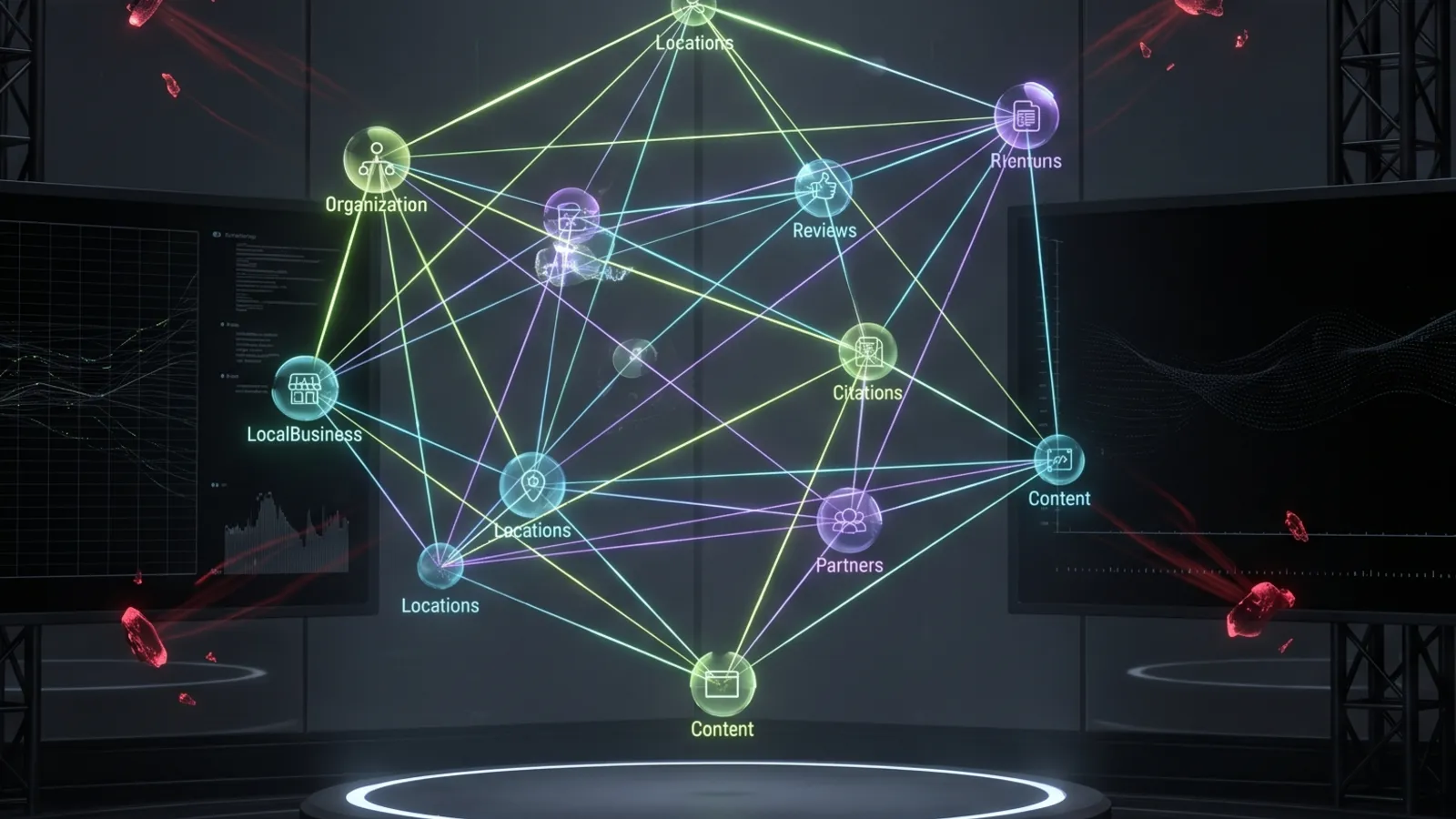
Schema markup on Washington sites includes Organization, LocalBusiness with CannabisDispensary type, BreadcrumbList on every page, FAQPage for regulatory content, and WebSite with SearchAction. Each location gets its own LocalBusiness entity with full geo coordinates, opening hours in structured format, and sameAs links connecting to Google Business Profile, Weedmaps, and social accounts.
How Can Spokane and Secondary Market Retailers Compete?
Most Spokane dispensaries have basic websites with minimal content, incomplete Google Business Profiles, and zero structured data markup. That gap creates opportunity. A Spokane retailer investing in systematic SEO today faces less resistance than a Seattle retailer spending three times the budget.
Legislative staff, state employees, and Evergreen State College students create a distinct consumer profile. Bremerton and the Kitsap Peninsula represent an underserved market where ferry commuters from Seattle create cross-regional search patterns.
What Keywords Drive Revenue for Washington Cannabis Retailers?
High-intent keywords in Washington fall into four categories. Location queries like "dispensary near me," "cannabis delivery Seattle," and "best dispensary Spokane" carry the strongest commercial intent. Product queries like "live resin near me," "THC edibles Seattle," and "pre-rolls Tacoma" target consumers with specific purchase intent. Regulatory queries like "Washington cannabis laws," "is recreational weed legal in WA," and "cannabis tax Washington" attract research-phase consumers. Brand queries like "[dispensary name] menu" and "[dispensary name] hours" capture existing customers seeking transactional information.
BudAuthority maps each client's keyword universe to these categories and builds content addressing every stage of the purchase journey. Location pages target proximity searches. Product education pages target mid-funnel research. Regulatory guides capture top-funnel awareness. Menu integration and hours pages convert bottom-funnel transactional queries.
Next step